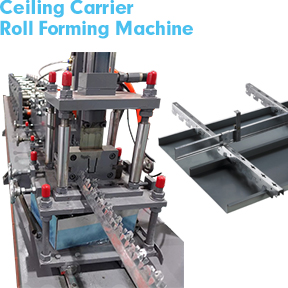
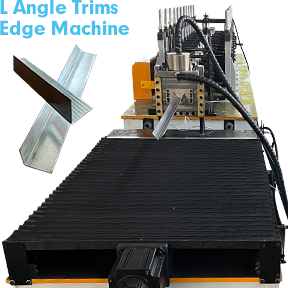
But what exactly is this machine, how does it work, and why is it essential for the renewable energy sector? This comprehensive guide will explain everything you need to know.
As solar energy expands across the globe, the demand for efficient manufacturing of mounting systems has skyrocketed. If you are new to the solar manufacturing industry or looking to upgrade your production line, you have likely encountered the term Solar Rack Roll Forming Machine.
Defining the Solar Rack Roll Forming Machine
A Solar Rack Roll Forming Machine is a specialized piece of industrial equipment designed to convert flat metal coils (usually steel or aluminum) into precise, high-strength profiles used for mounting solar panels.
In simple terms, it is a production line that takes a large roll of metal and continuously bends it through a series of rollers until it becomes a finished solar mounting rail, support leg, or cross brace. These components form the skeleton that holds solar panels in place, whether on a rooftop, a ground farm, or a carport.
How Does It Work?
To understand the value of this machinery, it helps to visualize the manufacturing process. A typical Solar Rack Roll Forming Machine operates in five key stages:
1. De-coiling
The process begins with a steel coil loaded onto a hydraulic uncoiler. This machine holds the heavy coil and feeds the material into the line at a controlled speed.
2. Guiding and Leveling
The strip passes through a straightening mechanism to ensure the material is flat and free of coil curvature, which is essential for accurate forming.
3. Pre-Punching (The Critical Step)
Unlike simple bending, a modern Solar Rack Roll Forming Machine integrates a hydraulic punching press. Before the metal is formed into a shape, it is punched with necessary holes for:
Grounding connections
Splice joints between rails
Attachment points for panel clamps
4. Roll Forming
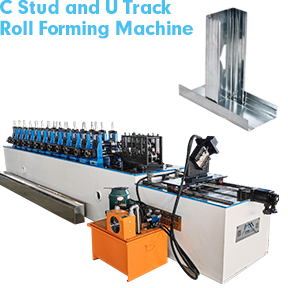
This is the heart of the machine. The flat strip passes through a series of roller dies mounted on stands. Each stand gradually bends the metal. By the time it reaches the final stand, the flat strip has been transformed into the desired C-shape, Z-shape, or U-shape profile required for PV mounting structures.
5. Cutting and Stacking
Once formed to the correct length, a flying cut-off press cuts the profile without stopping the line. Finally, an automatic stacker collects the finished parts and organizes them for packaging.
What Products Can It Make?
The versatility of a Solar Rack Roll Forming Machine allows manufacturers to produce a wide array of components. The most common profiles include:
Solar PV Rails: The main rails that panels are directly attached to.
Foundation Posts: Vertical poles driven into the ground for fixed-tilt systems.
Purlin and Girts: Horizontal supports used in ground-screw and concrete block systems.
Tracker Components: Structural parts for single-axis solar tracker systems that follow the sun.
Why is it Essential for the Solar Industry?
Before the advent of dedicated Solar Rack Roll Forming Machines, manufacturers relied on press brakes or fabrication shops to bend metal piece by piece. This was slow, inconsistent, and expensive. Here is why roll forming is the superior choice:
Unmatched Speed and Volume
A solar farm requires thousands of identical parts. A roll forming machine operates continuously, producing 15 to 30 meters of profile per minute. This high-speed output makes large-scale solar projects economically viable.
Consistency and Precision
Solar panels are fragile and expensive. If the mounting rails are even slightly off-specification, panels can break or installation becomes impossible. The roll forming process ensures every single piece is an exact replica of the last.
Material Strength
The process of cold bending metal actually work-hardens the steel, increasing its yield strength. This allows manufacturers to use thinner, lighter steel without sacrificing the structural integrity needed to hold panels against high winds and snow loads.
Servo Electric Drive Systems: Offer higher energy efficiency and precision compared to traditional hydraulic drives.
Quick Changeover Technology: Allows the machine to switch between different profile sizes (e.g., a residential rail vs. a commercial rail) in minutes, maximizing uptime.
Types of Solar Rack Machines
There are generally two configurations available:
Standard Rail Machine: Dedicated to producing one or two specific rail profiles at very high speeds. Ideal for manufacturers who have standardized their product line.
Convertible/Changeable Machine: Designed with interchangeable roller cassettes. This is perfect for contract manufacturers who need to produce different profiles for different clients.
We use cookies to enable all functionalities for best performance during your visit and to improve our services by giving us some insight into how the website is being used. Continued use of our website without having changed your browser settings confirms your acceptance of these cookies. For details please see our privacy policy.